— Browse
All declassified files
7 records in the current view.
 pdfNASA1969
NASA-UAP-D1, Apollo 12 Transcript, 1969
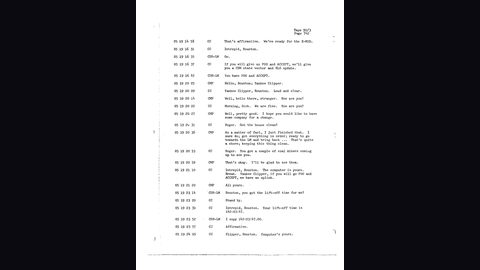
Apollo 12 was the fourth crewed U.S. mission to the Moon and the second to land astronauts on the lunar surface. This document is an excerpt from the Apollo 12 Technical Air-to-Ground Voice Transcription, November 1969, highlighting two periods in which astronauts reported observing unidentified phenomenon: a one hour period on the fifth day, and a two minute period on the sixth day. These transcripts contain contemporaneous observations by the flight crew reacting to unidentified phenomenon. • Day 05, Hour 19, Minute 14, Second 58 through Day 05, Hour 20, Minute 12, Second 14: o At 05:19:27:25, the pilot of the Lunar Module (LMP-LM), Astronaut Alan L. Bean, described observing particles and flashes of light “sailing off in space” via the onboard Alignment Optical Telescope (AOT). He characterized these phenomenon as “escaping the Moon.” • Day 06, Hour 00, Minute 21, Second 42 through Day 06, Hour 00, Minute 23, Second 33: o Mission Commander, Charles “Pete” Conrad, described observing floating debris outside the lunar module, which had been illuminated by the module’s onboard tracking light. At 06:00:21:51, Conrad assessed that the tracking light had burnt out because he could no longer see the debris from the module.
Moon
 pdfNASA1969
NASA-UAP-D4, Apollo 11 Technical Crew Debriefing, 1969
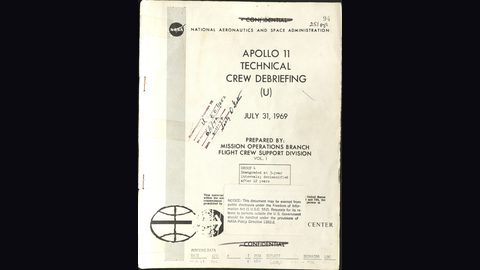
Apollo 11 was the third crewed mission to the Moon and the first to land Astronauts on the lunar surface. This document is an excerpt from the Apollo 11 Technical Crew Debriefing (Volumes 1 and 2) from July 31, 1969. The document highlights three observations: one, an object on the way out to the Moon; two, flashes of light inside the cabin; and three, a sighting on the return trip of a bright light tentatively assumed by the crew to be a laser. • Page 6-33 (Vol. 1). [Lunar Module Pilot for Apollo 11, Buzz Aldrin]: “The first unusual thing that we saw I guess was 1 day out or something pretty close to the moon. It had a sizeable dimension to it, so we put the monocular on it.” The crew speculated that it could have been the S-IVB stage of the Saturn V launch vehicle. • Page 6-37 (Vol. 1). [Lunar Module Pilot for Apollo 11, Buzz Aldrin] “The other observation that I made accumulated gradually. I don’t know whether I saw it the first night, but I’m sure I saw it the second night. I was trying to go to sleep with all the lights out. I observed what I thought were little flashes inside the cabin, spaced a couple of minutes apart…” • Page 21-1 (Vol. 2). [Lunar Module Pilot for Apollo 11, Buzz Aldrin] “I observed what appeared to be a fairly bright light source which we tentatively ascribed to a possible laser.”
 imageNASA1969
NASA-UAP-VM1, Apollo 12, 1969
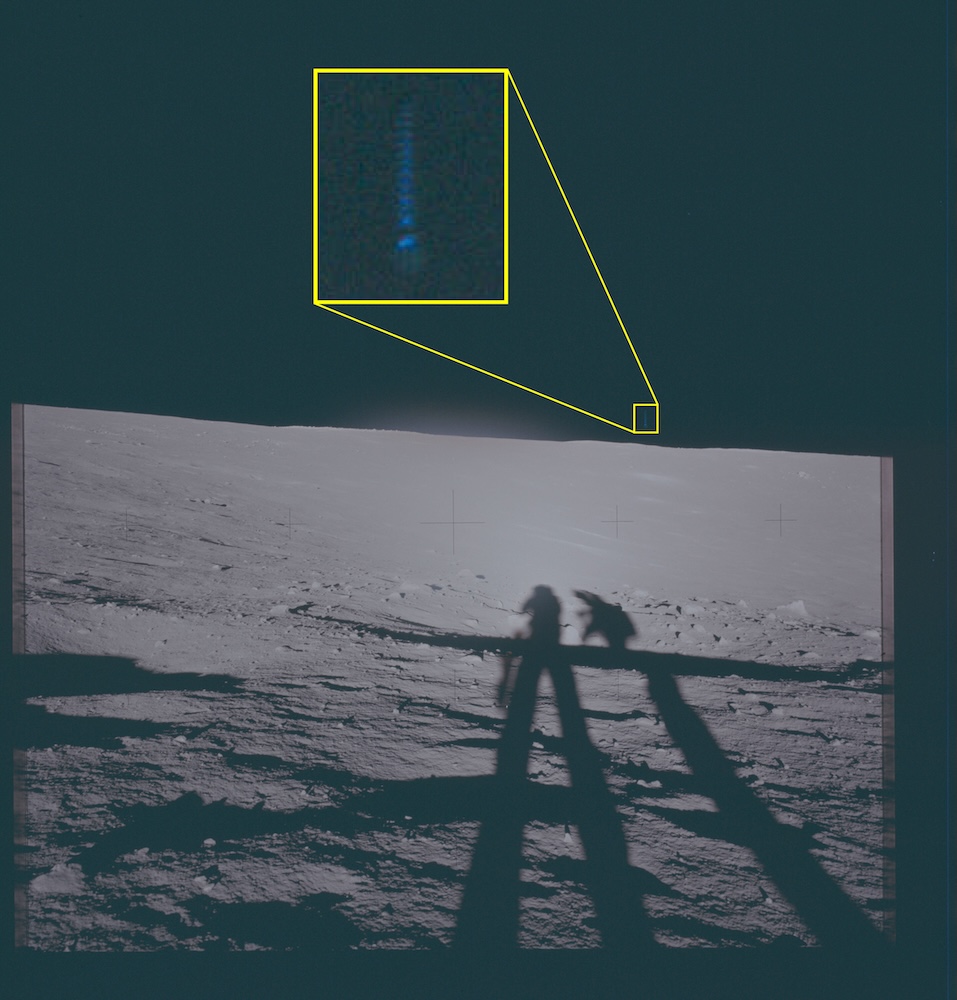
This archival photograph depicts the lunar surface as viewed from the landing site of Apollo 12. This image features a highlighted area of interest slightly to the right of the vertical axis of the frame, above the horizon, in which unidentified phenomena are visible. This image has been modified from its original state to assist viewers in identifying specific areas of interest. These highlights are provided for contextual purposes only. Such alterations do not constitute an analytical judgment, investigative conclusion, or factual determination regarding the nature or significance of the subject matter.
Moon
 imageNASA1969
NASA-UAP-VM2, Apollo 12, 1969
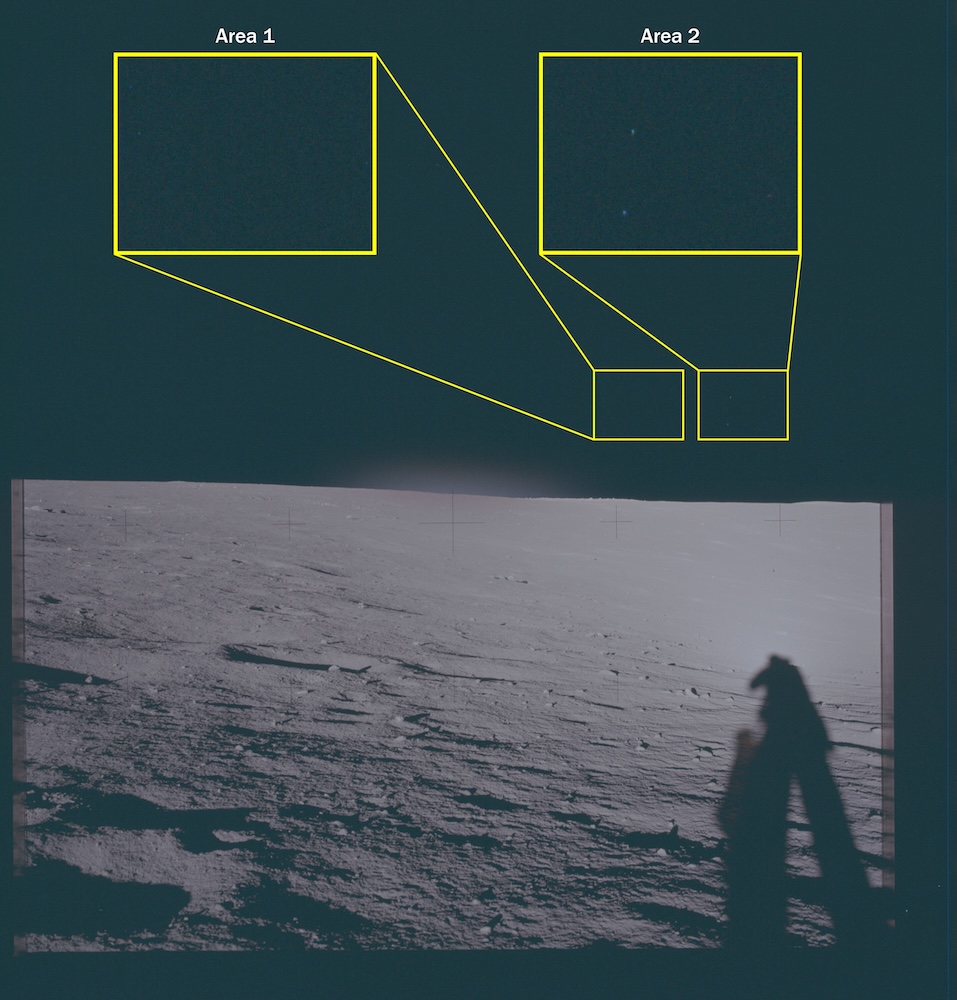
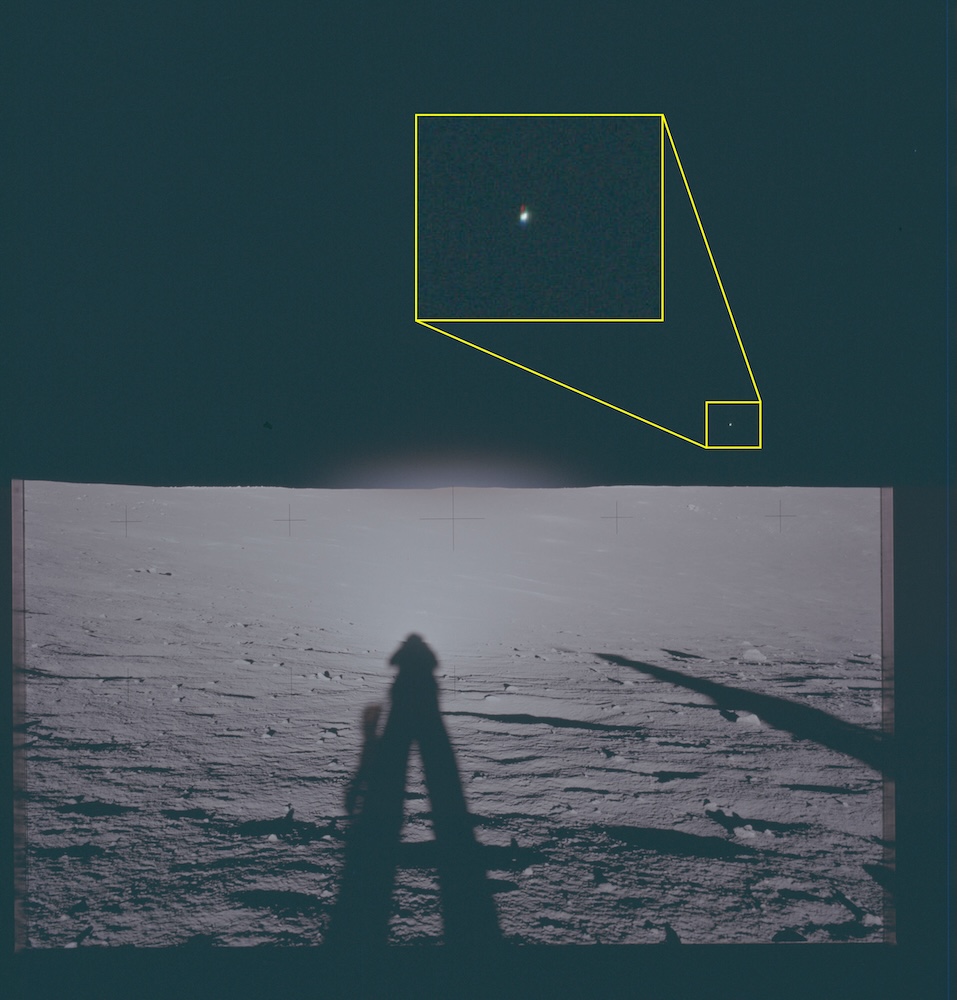
This archival photograph depicts the lunar surface as viewed from the landing site of Apollo 12. This image features two highlighted areas of interest, labeled “Area 1” and “Area 2,” slightly to the right of the vertical axis of the frame, above the horizon, in which unidentified phenomena are visible. This image has been modified from its original state to assist viewers in identifying specific areas of interest. These highlights are provided for contextual purposes only. Such alterations do not constitute an analytical judgment, investigative conclusion, or factual determination regarding the nature or significance of the subject matter.
Moon
 imageNASA1969
NASA-UAP-VM3, Apollo 12, 1969
This archival photograph depicts the lunar surface as viewed from the landing site of Apollo 12. This image features a highlighted area of interest near the right edge of the frame, above the horizon, in which unidentified phenomena are visible. This image has been modified from its original state to assist viewers in identifying specific areas of interest. These highlights are provided for contextual purposes only. Such alterations do not constitute an analytical judgment, investigative conclusion, or factual determination regarding the nature or significance of the subject matter.
Moon
 imageNASA1969
NASA-UAP-VM4, Apollo 12, 1969
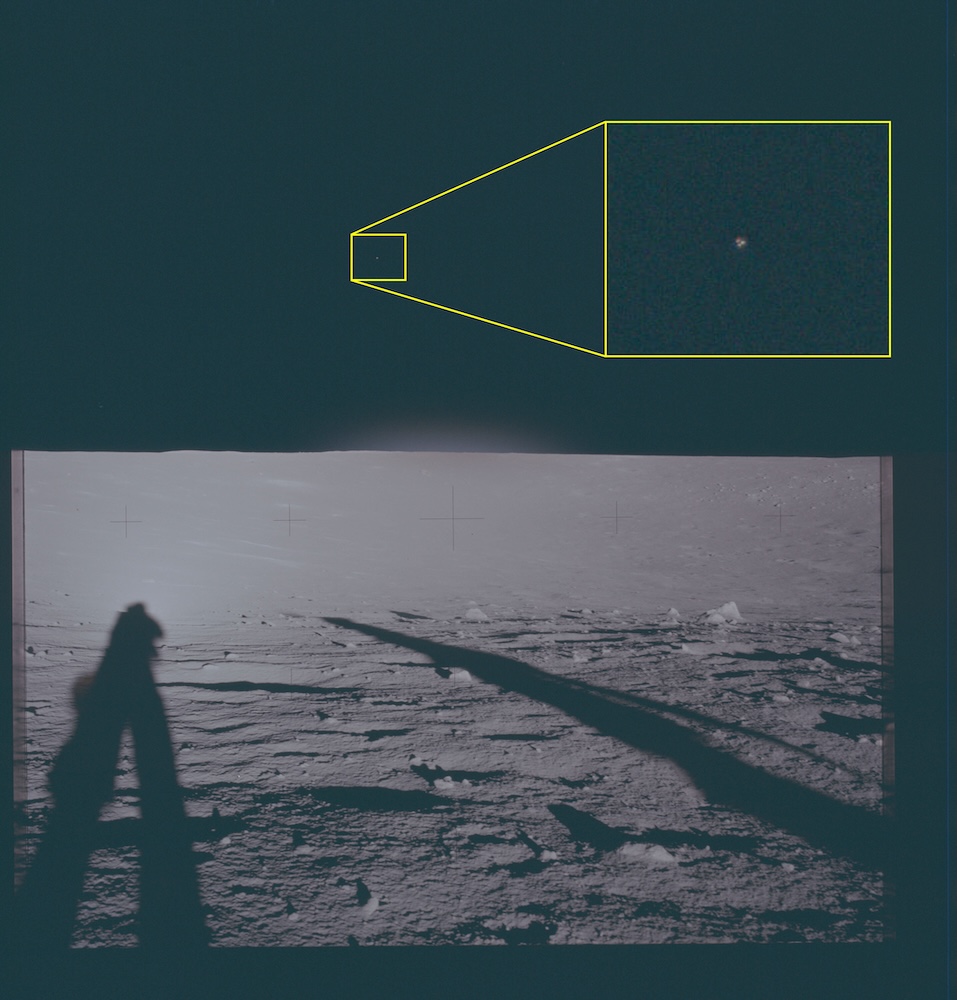
This archival photograph depicts the lunar surface as viewed from the landing site of Apollo 12. This image features a highlighted area of interest slightly to the left of the vertical axis of the frame, above the horizon, in which unidentified phenomena are visible. This image has been modified from its original state to assist viewers in identifying specific areas of interest. These highlights are provided for contextual purposes only. Such alterations do not constitute an analytical judgment, investigative conclusion, or factual determination regarding the nature or significance of the subject matter.
Moon
 imageNASA1969
NASA-UAP-VM5, Apollo 12, 1969
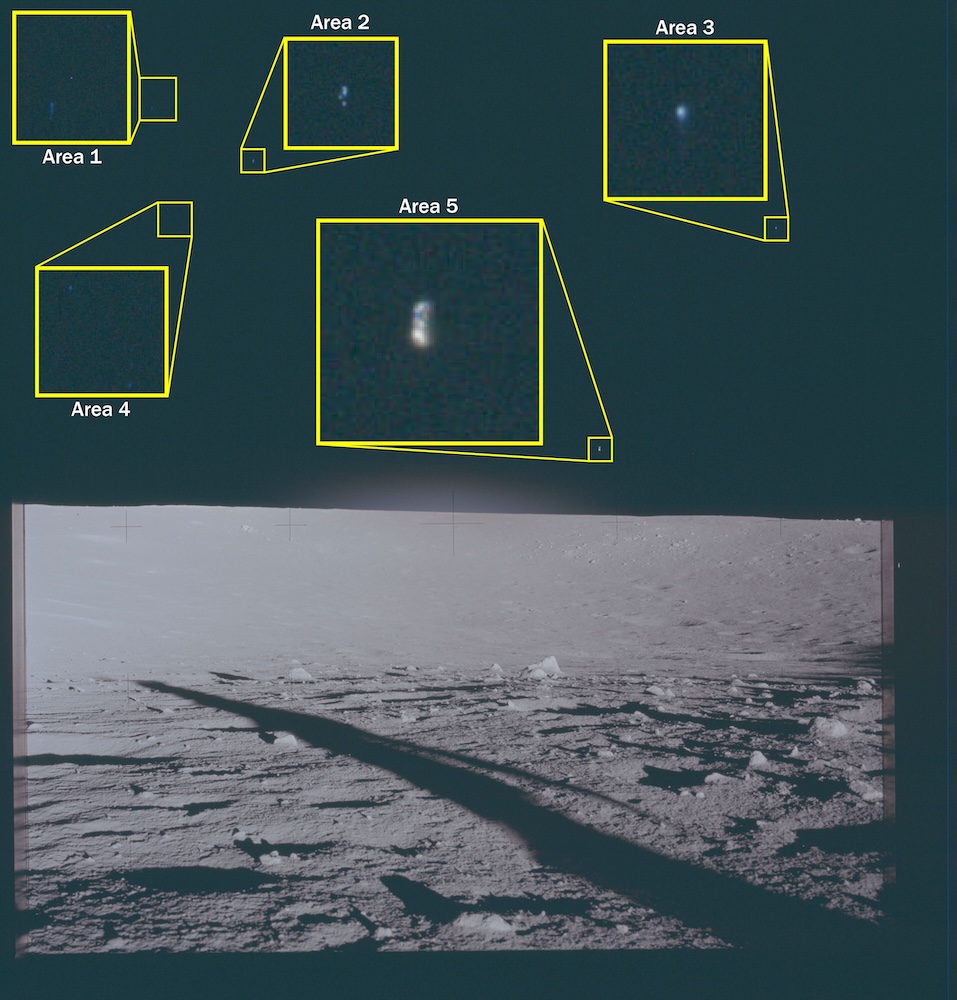
This archival photograph depicts the lunar surface as viewed from the landing site of Apollo 12. This image features five highlighted areas of interest, labeled “Area 1” through “Area 5,” above the horizon, in which unidentified phenomena are visible. This image has been modified from its original state to assist viewers in identifying specific areas of interest. These highlights are provided for contextual purposes only. Such alterations do not constitute an analytical judgment, investigative conclusion, or factual determination regarding the nature or significance of the subject matter.
Moon